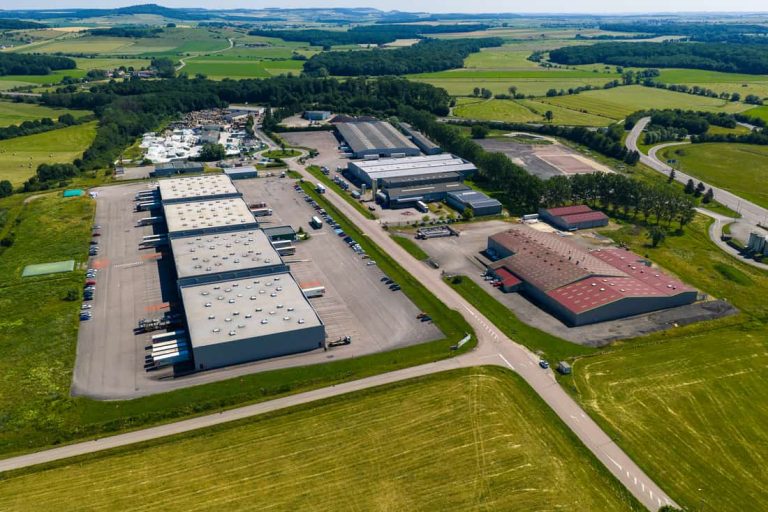
Châtenois, Grand Est
Réseau Geolink
Hubs métier Filières et marchés
Corporate Sites institutionnels
IA Agent IA Geolink
Épinal
Ideally situated at the crossroads of Europe, the Vosges are connected to major neighbouring cities in under 2 hours:
The region is also served by motorways, rail links and nearby business airports.
The Vosges are home to strong, well-established industrial sectors that are recognised nationwide:
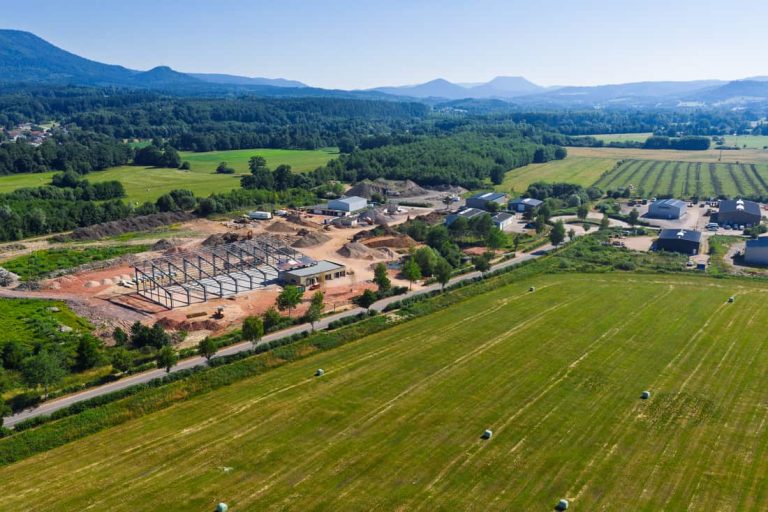
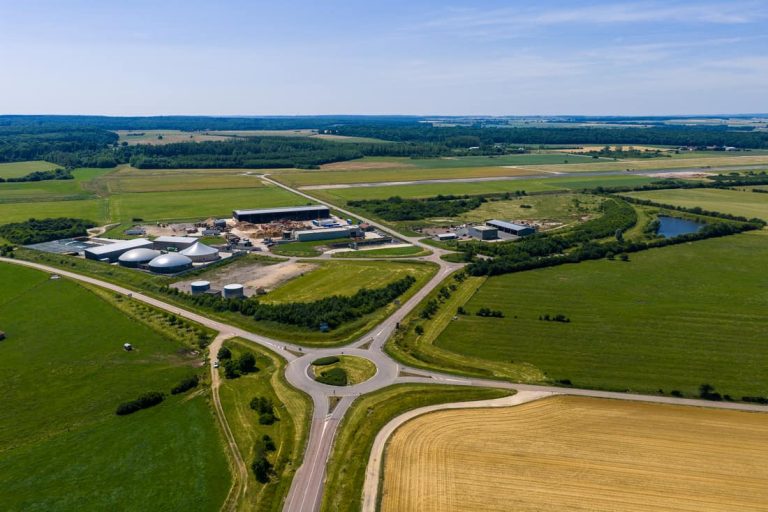
The Vosges offer abundant and competitively priced land, suitable for all types of industrial projects:
The economic development agency VOSGES&CO is your single point of contact for bringing your business relocation project to fruition. It supports businesses with:
The region also offers access to 180 specialist laboratories (industry, AI, green transition) as well as renowned engineering schools such as ENSTIB and INSIC. Innovative companies such as VERSO Energy (sustainable aviation fuel) and E-wattch (energy IoT) illustrate the region’s dynamism.
Immo-HUB, in partnership with the development agency VOSGES&CO, will support you in bringing your plan to set up in the Vosges to fruition. Together, they give you access to the region’s best land and property opportunities, with personalised support at every stage of your project.
Contact Immo-HUB today to be put in touch with our experts.
The industries where the territory concentrates talent, research and established companies. Select a sector for the detail.
Building on a well-structured agricultural sector and an already dense industrial base, the Vosges agri-food sector provides a particularly favourable environment for the establishment and development of industrial projects. The sector plays a key role in the local economy, with around 160 agri-food establishments and nearly 4,000 salaried jobs, reflecting an industry that is mature, high-performing and resilient.
The Vosges have a robust agricultural base, with 3,200 farms – the majority of which are livestock-based – and 5,600 people employed in agriculture. The region is particularly notable for the importance of its dairy sector: 20% of farms are involved in dairy production, making the Vosges a leading department within the Grand Est region.
This specialisation in dairy farming is reflected in a herd of 60,000 dairy cows (20% of the regional herd, ranking first in the Grand Est region), supplemented by 27,000 suckler cows and a total of 241,000 head of cattle. The department is also home to 35,000 ewes. This concentration is a major asset for manufacturers seeking consistent volumes, local supply and traceability.
The extensive agricultural land – 220,410 hectares registered under the Common Agricultural Policy – combined with a high proportion of permanent grassland (57% of utilised agricultural area), promotes sustainable, high-quality production that meets the current expectations of food markets.
The Vosges agri-food sector covers a broad spectrum of industrial activities: dairy processing, infant nutrition, meat products, industrial bakery and pastry production, confectionery, milling, ice cream and frozen foods. This diversity reflects extensive industrial expertise and the region’s capacity to accommodate projects with a variety of market positions.
In terms of employment, the dairy sector remains dominant with 1,759 jobs, followed by beverages (1,095 jobs) and meat (436 jobs). This breakdown reflects both a long-standing specialisation and a diverse industrial base that facilitates new business set-ups.
The presence of recognised industrial players – such as Nestlé Waters (Vittel/Contrexeville waters), Lactalis, B.G. Bongrain, Thiriet and Nestlé Bébé, to name but a few, helps to shape a reliable ecosystem, with available skills, established service providers and supply chains that are already up and running.
With nearly 4,000 employees in the agri-food sector and 912 full-time equivalents in agriculture, the Vosges region benefits from a pool of skills that can be drawn upon immediately. The long-standing presence of agri-food activities fosters the transfer of know-how and the stability of teams – key criteria for industrial projects seeking operational reliability and continuity of production.
The sector is also experiencing a wave of renewal: 49 young farmers set up their own farms between 2015 and 2016, mainly in the dairy sector, demonstrating confidence in the sector’s long-term viability.
The Vosges have everything to attract transport and logistics companies: a strategic location at the heart of Europe, efficient infrastructure and a dynamic economic landscape. This is partly why the department ranks as the fifth-largest industrial department in France. Over the past ten years, 34 warehouses exceeding 5,000 m² have been built, providing property solutions tailored to modern needs
At the centre of major European transport routes, the Vosges lie directly on the East–West and Rotterdam–Marseille corridors. This makes it an ideal location for businesses targeting Germany, Belgium or Luxembourg.
The road network, which is particularly extensive, comprises 51 km of motorway (A31 and A33), 150 km of national roads and 3,243 km of departmental roads. The department also boasts 73 km of waterways and 359 km of railway lines, 192 km of which are electrified. The main regional airports (Metz-Nancy-Lorraine, Épinal-Mirecourt, Basel-Mulhouse) round off the picture.
With 315 businesses and over 6,000 employees, a genuine ecosystem has been established. These businesses offer a comprehensive range of services: conventional road transport, cold storage, freight forwarding and express courier services. Major players such as Mauffrey, MGE Transports & Services, Stef Transport Épinal and SEL Labastide underscore the sector’s strength.
The Vosges region offers a structured range of courses for careers in transport and logistics: from the CAP to the BAC+3. At the Épinal Hubert Curien University Institute of Technology (IUT), students can study for a BUT (University Technical Diploma) in Industrial Logistics Quality and Organisation (QLIO). The LOUIS GESLER Regional Industrial Sixth Form College offers a Vocational Baccalaureate in Logistics, whilst prospective drivers can undertake a CAP training programme at the P.G. de Gennes Vocational College.
Since late 2023, the provision has been further strengthened. The Mauffrey Academy in Éloyes and Passeport Prévention (due to open in late 2024) offer an additional specialisation, directly tailored to the needs of the sector.
Set amidst a forest massif covering more than half of the region, the Vosges boast a unique strategic asset: an abundant and diverse supply of timber. This natural wealth forms the basis of a new ambition: to develop the bioeconomy and wood chemistry by meeting the growing demand for natural cosmetics, biostimulants and biocontrol for sustainable agriculture, bio-based adhesives and resins, additives for composites, and biomaterials for functional packaging. All whilst replacing fossil-based resources with bio-based molecules, natural ingredients and innovative biomaterials.
The Vosges bioeconomy is underpinned by a comprehensive and well-structured timber sector, encompassing the entire value chain within the region, from the raw material to industrial applications. With a forest cover of 49% and 285,436 hectares of woodland, the Vosges is the most forested department in the Grand Est region. This abundance of raw material is complemented by a dense network of sawmills, primary and secondary processing sites, and Europe’s largest paper mill.
The Vosges’ strategy is based on maximising the value of timber and biomass by covering the entire value chain:
The 7,632 employees in the timber sector, working across forestry, timber harvesting, sawmilling, furniture manufacturing and paper and board production, ensure close links with producers and recognised expertise.
The region boasts a comprehensive network of stakeholders capable of supporting projects at every stage, from proof of concept to industrialisation. Structured programmes, supported at regional and European level, enable innovative solutions to be tested, validated and scaled up:
Several pioneering programmes place the region at the forefront of the bioeconomy:
Send us a brief and we'll shortlist the best sites and incentives for your project.
Start a project →Our team replies within 24 business hours. For an urgent request, call us at +33 (0)4 11 92 01 32.
Free & no commitment, we guide international investors.